
Feedback Software That Turns Comments Into Action
October 4, 2026
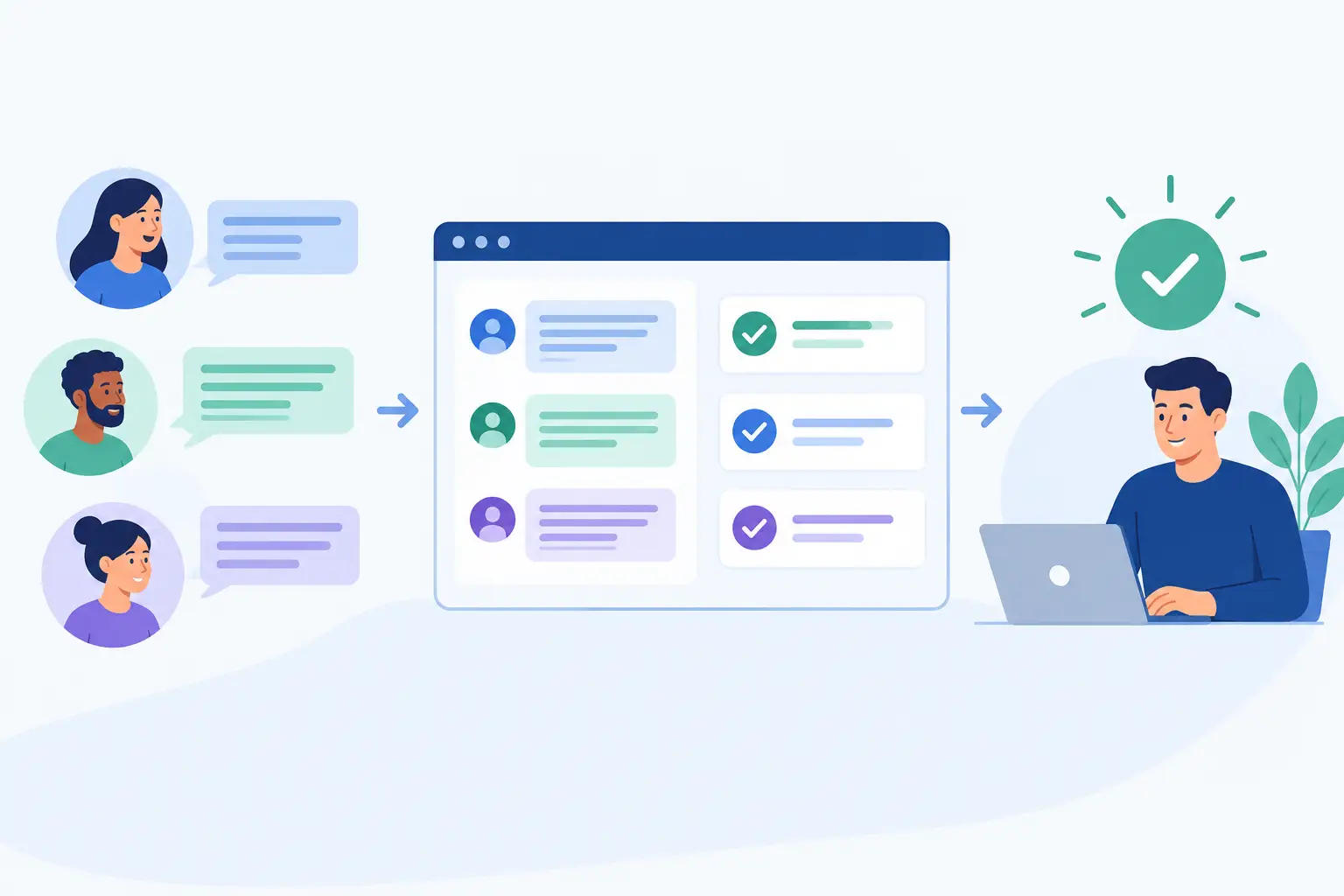
A customer says service is slow. A technician notes a recurring equipment issue. An employee flags a process that creates rework. Each comment may sit in a different system, owned by a different team, with no shared way to determine whether it represents an isolated problem or a pattern.
That is the operational gap feedback software should close. The goal is not simply to collect more responses or create another dashboard. It is to bring feedback already moving through the organization into a managed process for classification, analysis, prioritization, ownership, and action.
What feedback software should do
Many organizations first encounter feedback software through surveys. Surveys matter, but they are only one source of evidence. The most useful feedback often already exists in customer emails, complaint records, support tickets, work-order notes, call summaries, online forms, and open-ended survey responses.
A feedback system becomes more valuable when it can ingest these sources, preserve their context, and organize them around consistent questions: What happened? Who was affected? Where in the journey did the issue occur? How often does it occur? What is the likely root cause? Who owns the next action?
This distinction matters because collection tools and intelligence platforms solve different problems. A collection tool helps a team ask for feedback. A feedback intelligence platform helps the organization use feedback as operational evidence.
For a customer-experience leader, that may mean connecting detractor comments with complaint themes and service records. For an operations manager, it may mean identifying repeated failures in work-order notes before they become a larger service problem. For employee-experience teams, it may mean separating one-off frustrations from recurring process barriers that affect retention and productivity.
Why disconnected feedback creates expensive blind spots
Feedback is usually fragmented for understandable reasons. Customer service owns tickets. Operations owns work-order systems. Marketing or research owns surveys. Human resources manages employee listening. Each system was selected for a specific job, but the organization still needs a complete view of what people are saying.
When the data remains separated, teams spend too much time preparing files, reconciling categories, and debating whose data is more reliable. Open-ended comments are particularly difficult. They contain detail that scorecards miss, yet manually reading thousands of entries is slow and inconsistent.
The result is familiar: leaders see a satisfaction score move but cannot explain why. They receive a complaint report without knowing whether the same issue appears in emails or field notes. They identify a theme but cannot show whether anyone addressed it.
A better approach creates one governed feedback record across sources. It does not erase source-level context. Instead, it makes that context usable alongside common classifications, projects, segments, and performance indicators.
Volume is not the only problem
High feedback volume is challenging, but low-volume feedback can also be consequential. A small number of comments from key accounts, safety-related complaints, or repeated reports from a particular region may require attention even when they do not dominate the data.
That is why analysis should not rely on frequency alone. Teams need to weigh severity, customer impact, strategic importance, financial exposure, and recurrence. A system that merely counts mentions can misdirect effort toward the loudest theme rather than the most important one.
The operational workflow behind useful insight
Effective feedback management follows a repeatable lifecycle. It starts with bringing relevant data sources into a shared environment, including both structured fields and unstructured text. Structured fields might include location, product, account type, date, or service line. Unstructured text provides the explanation behind the event.
Next comes organization. Teams need practical classifications that reflect how they make decisions: issue type, journey stage, root cause, sentiment, urgency, or responsible department. A classification structure should be detailed enough to support action but simple enough that people use it consistently.
Then comes analysis. Guided Analysis can help users move from broad questions to defensible findings without requiring every stakeholder to be a data specialist. A manager may begin by asking why complaints increased in a region, then filter by issue type, review representative comments, compare trends, and test whether a process change corresponds with the increase.
Insight becomes valuable only when it enters a workflow. A finding should lead to an assigned action, a clear owner, due date, priority, and status. The Action Backlog is the difference between a report that is discussed once and an operating mechanism that remains visible until work is complete.
Finally, teams need to close the loop. Did the action reduce the issue? Did the relevant feedback pattern change? Was the root cause correctly identified? A feedback program improves when it measures not only sentiment or satisfaction, but also the effectiveness of the actions taken in response.
Choosing feedback software for the work you actually do
The right platform depends on the organization’s data landscape and decision process. A small team running occasional pulse surveys may need straightforward survey creation, respondent management, and reporting. A larger organization with several feedback systems needs integration, governance, flexible classification, and an accountable path from insight to execution.
When evaluating options, focus on the workflow after the feedback arrives. Ask whether the platform can manage the following needs:
- Ingest feedback from the sources teams already use, rather than requiring every team to start over.
- Analyze open-ended text alongside scores, customer attributes, operational records, and other structured data.
- Apply consistent classifications while preserving the original feedback and source context.
- Support root-cause analysis instead of stopping at high-level sentiment labels.
- Create, assign, and monitor actions tied directly to documented findings.
- Share governed views with leaders and frontline teams without forcing them to work from disconnected exports.
A platform with excellent survey design may still be insufficient if survey responses are only one part of the organization’s evidence. Likewise, a generic business-intelligence tool can visualize data well but may require substantial manual preparation before qualitative feedback is ready for analysis. The best choice depends on whether the primary challenge is collection, reporting, or end-to-end feedback operations.
Look for traceability, not just attractive dashboards
Dashboards are useful when they support a decision. A Complaint Dashboard, for example, should allow a user to move from a rising issue category into the underlying comments, relevant segments, associated root causes, and current corrective actions.
That traceability builds confidence. Executives can see the scale of a problem, analysts can inspect the evidence, and operational owners can understand exactly what they are expected to address. Without it, teams can challenge the conclusion because the path from chart to source material is unclear.
Designing a feedback program people will use
Technology cannot compensate for vague ownership or unclear decisions. Before deploying a platform, define the business questions that feedback should answer. Examples include identifying drivers of customer churn, reducing repeat service contacts, finding barriers in a new employee process, or monitoring whether corrective actions are working.
Start with a limited set of meaningful data sources rather than attempting to connect everything immediately. A focused pilot can establish useful classifications, validate data quality, and demonstrate how feedback moves into action. Once the workflow is working, additional sources and teams can be added with less confusion.
Governance also matters. Someone should own classification standards, review emerging themes, and determine when an issue becomes an action item. That does not require centralizing every decision. It requires a common framework so local teams can act while leadership retains a reliable view of enterprise-wide patterns.
StatQuestions is built for this broader workflow: centralizing feedback from existing sources, organizing unstructured information, supporting guided analysis, and maintaining an action record after the insight is identified.
Make feedback part of operating discipline
The most effective organizations do not treat feedback as a periodic research exercise. They treat it as a continuous input into service improvement, process design, customer retention, and management decisions.
That requires discipline: review the evidence, distinguish symptoms from root causes, assign the work, and verify the outcome. Feedback software earns its place when it makes those habits easier to sustain - especially when the most valuable signals are buried in the comments, emails, and notes teams already have.